For many shoppers in Japan, MUJI is almost synonymous with simplicity, quality, and affordable design. But only a few know about the MUJI Card – a rewards credit card that aims to bring extra value and a more enjoyable experience to MUJI’s loyal customers.
If you’ve been curious about how this card works, what benefits it really offers, and whether any hidden fees lurk in the details, this article is crafted to guide you and clear up the confusion.



This article is for anyone interested in shopping efficiently at MUJI stores across Japan—perhaps residents, long-term visitors, or even curious travelers hoping to maximize savings.
What Is the MUJI Card in Japan?
The MUJI Card is a collaborative credit card between MUJI and Credit Saison. Besides standard cardholder perks, it offers exclusive MUJI shopping rewards , bonus points, and minimal fees.
Available to both Japanese residents and some foreign nationals, it represents an accessible points program, though you’ll need a stable income and a valid address in Japan for the full application process.
Cards are often issued as either Visa or American Express versions, offering flexibility for both MUJI purchases and daily use.
Why Consider the MUJI Card? Exploring Shopping Rewards
MUJI shoppers often wonder if using the branded card will noticeably change their spending routine.
The short answer: it can, though the impact depends on how frequently you shop and whether you maximize recurring point offers. Here are the main advantages that are mentioned most:
Generous Welcome and Anniversary Points
New MUJI Cardholders typically receive between 1,000 and 2,000 MUJI points upon signing up, occasionally more during campaigns.
Additionally, every year on your card’s anniversary, MUJI tops up your account with bonus points, which can equate to a tangible yen discount when used on eligible purchases in stores or online.
Sometimes, timing your application during a seasonal campaign brings extra points, so paying attention to these details may pay off.

Extra Points During Your Birthday Month
One less-known benefit: cardholders get bonus MUJI points during their registered birthday month. It’s a pleasant surprise, even if it’s not always a dramatic sum.
For example, you might receive 500 points—enough to cover part of a shopping basket or a few household goods, depending on what you like to buy.
Ongoing Earnings Every Time You Shop
For every 200 yen spent at official MUJI outlets in Japan, you’ll earn 1 MUJI point. That’s roughly a 0.5% points-back rate.
Sometimes it feels modest, but over time, the rewards start to add up—especially if you often buy stationery, clothing, or household organizers.
Keep in mind, purchases outside MUJI do still earn general Saison points, convertible to MUJI points in set increments.
Are There Any Fees or Catches?
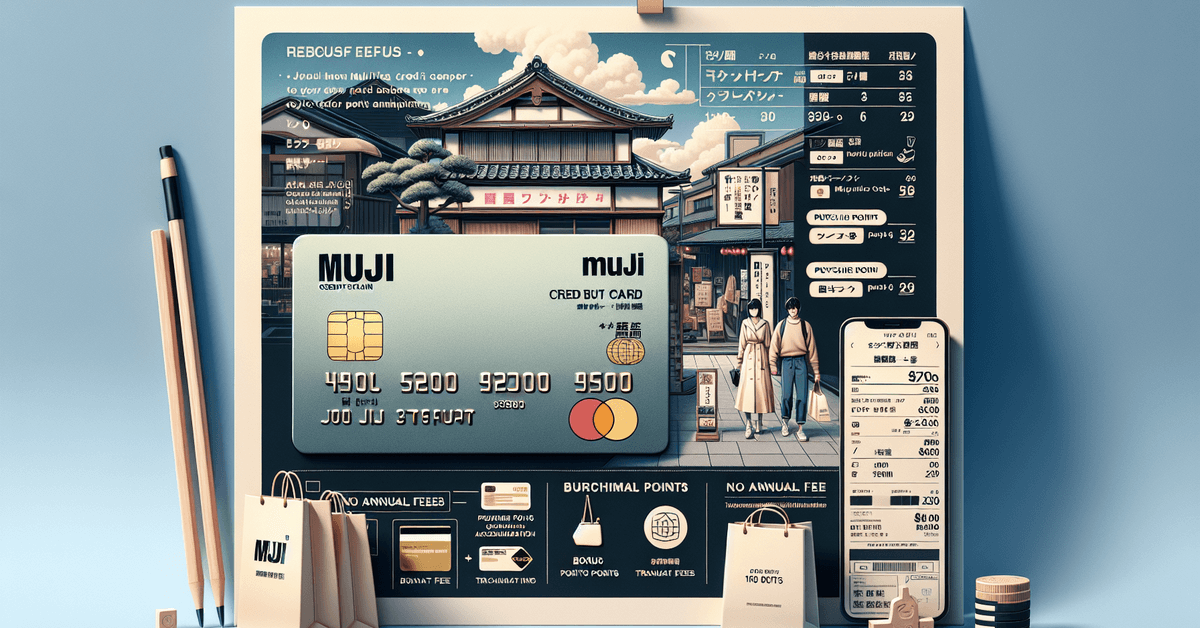
Yearly fees often make or break a credit card’s appeal. Fortunately, the MUJI Card is designed to be user-friendly— no annual fee for both main and additional cards.
No fee for issuing or renewing the card, either. However, some charges are worth being aware of:
- Late payment fee: Like most cards, you’ll incur a charge if you miss a monthly payment.
- Foreign transaction fees: Using your MUJI Card abroad may bring a 2%-3% surcharge, depending on the network (Visa or Amex).
- Cash advance fees: If you use the credit line for cash advances—which most users don’t—it attracts standard interest and handling charges.
Thankfully, these fees are avoidable for typical MUJI shopping within Japan. There’s little in the way of hidden traps, but always checking the latest terms on the official MUJI Japan site will help you stay informed.
How to Apply for a MUJI Card in Japan
The application process is pretty straightforward, but not instant. Here’s what you’ll generally need to apply:
- A Japanese address for delivery and billing
- Government-issued photo ID (Residence Card/Passport)
- Proof of income (depends on application type)
- A mobile number for confirmation
Applications can be completed online via MUJI’s site or at select stores. If you’re a foreign national, the process might take slightly longer and, on rare occasions, may require additional income proof.
Many find that applying well before a planned purchase or trip—say, for a home move or seasonal restock—gives the best chance to use the welcome bonus points before they expire.
Maximizing MUJI Card Benefits: Practical Tips and Subtle Pitfalls
It’s tempting to just use the card and forget about it. But there are effective ways to make the MUJI Card work harder for you, especially when you shop often.
Stacking Campaigns and Time-Limited Promotions
Paying attention to periodic campaigns—like “MUJI Week”—can multiply your points or unlock exclusive discounts. MUJI sometimes runs Amex/Visa-only events that reward cardholders with extra points or even small gifts. Checking the latest offers on the MUJI Japan promotions page can help.
Using Points Efficiently
MUJI points earned via the card are valid for one year from the date they’re awarded, so using them on small, frequent purchases or saving up for a bigger item is a personal choice.
Some shoppers, perhaps unwittingly, let points expire, which is a shame. Maybe keep a mental note or opt in for email reminders inside your MUJI account.
Combining with Other Loyalty Programs
If you accumulate Saison points (the parent issuer of the card), there’s a mechanism for converting them to MUJI points, usually in blocks of 2,000 points, though the conversion rate can change.
Some also use the card for everyday non-MUJI spending, then funnel those points into future MUJI splurges. Whether that works best depends on your overall spending and reward priorities.
| Feature | MUJI Card Japan | Standard Credit Card |
|---|---|---|
| Annual Fee | None | Varies (often ¥1,000+) |
| Welcome Bonus | 1,000–2,000 MUJI Points | Variable (often cashback) |
| Birthday Bonus | 500 Points | Rare |
| MUJI Point Rate | 0.5% at MUJI | 0% at MUJI |
| Foreign Transaction Fee | 2%–3% | 1.5%–3% |
Who Should (and Maybe Shouldn’t) Get the MUJI Card?
Frequent MUJI shoppers and those committed to the minimalist lifestyle will likely find value here. The annual bonuses and consistent points do accumulate for households that rely on MUJI for many essentials.
On the flip side, if you rarely step inside a MUJI store, or don’t want more cards in your wallet, the benefit might be too minor, unless you specifically want a no-fee credit card with basic rewards.
International students or foreigners on temporary visas sometimes struggle with credit approval in Japan, so this card may or may not work out depending on your status.
Checking eligibility before applying is worthwhile—MUJI and Saison both outline requirements on their Japanese-language pages, but online translation tools can help clarify specifics if needed.
Legal, Privacy, and Tax Considerations
The MUJI Card adheres to Japanese data privacy regulations. Make sure you’re comfortable with the data-sharing terms, as personal shopping data may be analyzed to offer campaigns.
Taxes aren’t usually impacted for personal use, but earning enough in rewards (or reporting business expenses) could, in rare cases, trigger specific requirements.
The best resource is always the official Saison Card site or a trusted tax advisor if you have concerns.
Comparison With Other Shopping Cards in Japan
MUJI Card’s most direct competitors are retailer cards from brands like Aeon, Rakuten, and department stores.
Each offers a version of point rewards, but MUJI’s focus on simplicity and clear, non-expiring points makes it appealing for focused spenders, not casual users.
Still, comparing your usual shopping destinations and the value of flexible points might influence your choice.
Visual Guidance
A flowchart or infographic showing the journey from application, through points-earning, and spending on both MUJI and partner networks could help visualize how value accumulates.
Table comparisons, like the one above, may be helpful for a side-by-side look at key features and fees. Image placeholders, such as snapshots of the card, main stores, and the points interface, would add clarity.
Final Thoughts: Is the MUJI Card Worth It?
The MUJI Card can be a real asset for loyal shoppers, offering a straightforward way to earn points, score birthday and anniversary treats, and unlock seasonal deals—all with no annual fee.
Those who rarely use MUJI (that’s definitely a situation many of us find ourselves in from time to time) may not get the same value, and careful attention to application requirements is smart for newcomers to Japan’s credit market.
Note: There are risks involved when applying for and using credit. Consult the bank’s terms and conditions page for more information.